Generative AI platforms have emerged as powerful tools for enterprises seeking to unlock new opportunities, drive innovation, and stay ahead of the curve in today’s dynamic business landscape. These platforms leverage advanced algorithms and techniques to generate diverse and creative content, ranging from images and text to music and design. In this article, we explore the wide-ranging applications of Generative AI platforms across various industries and business functions, showcasing how they empower organizations to reimagine processes, engage customers, and create value in unprecedented ways.
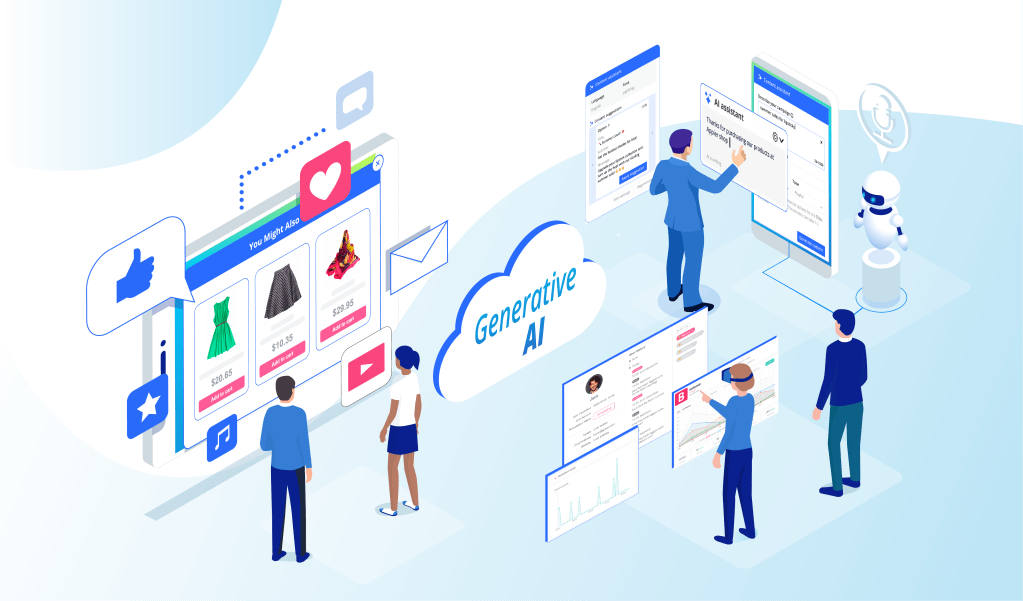
Understanding Generative AI Platforms
Generative AI platforms are software solutions that utilize machine learning algorithms and neural networks to generate new content based on patterns and examples from existing data. Unlike traditional AI systems that focus on analysis and prediction, Generative AI platform excels in creativity and imagination, enabling organizations to generate novel content that is indistinguishable from human-created content. These platforms leverage techniques such as Generative Adversarial Networks (GANs), Variational Autoencoders (VAEs), and Transformer models to generate images, text, audio, and more.
Key Components of Generative AI Platforms:
- Generative Models: These are the core algorithms and models that power Generative AI platforms, enabling the generation of content such as images, text, and music.
- Training Infrastructure: Generative AI platforms require robust training infrastructure, including high-performance computing resources, data storage, and scalable architecture to train and deploy generative models effectively.
- Data Management Tools: Managing and curating data is essential for training Generative AI models. Generative AI platforms provide tools and capabilities for data preprocessing, augmentation, and management to ensure high-quality training data.
- Integration APIs: Seamless integration with existing systems and workflows is critical for Generative AI platforms. These platforms offer APIs, plugins, and SDKs for integration with third-party applications, software platforms, and data sources.
Applications of Generative AI Platforms
Generative AI platforms offer a multitude of applications across diverse industries and business functions, revolutionizing the way organizations create, innovate, and engage with their customers. Let’s explore some of the key applications of Generative AI platforms:
1. Content Creation and Generation
Generative AI platforms empower organizations to create and generate a wide range of content, including images, videos, text, and music. These platforms can automatically generate content based on input parameters, such as style, theme, and context, enabling businesses to produce high-quality and engaging content at scale. From generating product images and marketing materials to creating personalized recommendations and interactive experiences, Generative AI platforms streamline content creation processes and drive creativity and innovation.
2. Design and Creative Expression
In the field of design and creative expression, Generative AI platforms offer innovative tools and capabilities for artists, designers, and creative professionals to explore and experiment with new ideas and concepts. These platforms enable users to generate unique and visually stunning designs, patterns, and artworks by leveraging generative algorithms and techniques. From generative art and graphic design to architectural modeling and fashion design, Generative AI platforms push the boundaries of creativity and inspire new forms of expression and design innovation.
3. Product Development and Optimization
Generative AI platforms play a crucial role in product development and optimization, enabling organizations to design, simulate, and optimize products and prototypes efficiently. These platforms leverage generative design algorithms to explore and evaluate design alternatives, optimize performance and functionality, and reduce time-to-market. From automotive and aerospace engineering to consumer electronics and industrial manufacturing, Generative AI platforms enable organizations to innovate and iterate on product designs rapidly, driving competitive advantage and market differentiation.
4. Personalization and Customization
Personalization and customization are key drivers of customer engagement and loyalty in today’s digital age. Generative AI platforms enable organizations to deliver personalized and customized experiences to their customers by generating content and recommendations tailored to individual preferences and behaviors. From personalized product recommendations and marketing messages to customized user interfaces and interactive experiences, Generative AI platforms empower organizations to engage with customers in more meaningful and personalized ways, driving customer satisfaction and loyalty.
5. Simulation and Forecasting
Generative AI platforms enable organizations to simulate and forecast complex systems and phenomena, providing valuable insights and predictions to support decision-making and planning. These platforms leverage generative modeling techniques to simulate various scenarios and outcomes based on historical data and input parameters. From financial forecasting and risk analysis to climate modeling and supply chain optimization, Generative AI platforms help organizations anticipate challenges, mitigate risks, and capitalize on opportunities, driving better decision-making and strategic planning.
6. Natural Language Processing (NLP) and Text Generation
In the field of natural language processing (NLP) and text generation, Generative AI platforms offer powerful tools and capabilities for generating text, summarizing documents, and generating creative writing. These platforms leverage advanced language models and neural networks to understand and generate human-like text based on input prompts and context. From generating product descriptions and marketing copy to summarizing articles and generating chatbot responses, Generative AI platforms enhance communication and enable organizations to deliver engaging and informative content to their audience.
7. Healthcare and Life Sciences
Generative AI platforms are revolutionizing the healthcare and life sciences industries by enabling organizations to analyze and generate insights from vast amounts of biomedical data. These platforms leverage generative modeling techniques to analyze medical images, predict patient outcomes, and discover new drugs and treatments. From medical imaging and diagnosis to drug discovery and genomics, Generative AI platforms empower healthcare professionals and researchers to accelerate scientific discovery, improve patient outcomes, and advance medical knowledge.
8. Entertainment and Media
In the entertainment and media industry, Generative AI platforms are transforming content creation, storytelling, and immersive experiences. These platforms enable creators and filmmakers to generate realistic visual effects, animate characters, and produce interactive narratives using AI-driven tools and techniques. From virtual reality experiences and augmented reality applications to interactive storytelling and gaming, Generative AI platforms push the boundaries of creativity and immersion, delivering engaging and captivating experiences to audiences worldwide.
Benefits of Adopting Generative AI Platforms
The adoption of Generative AI platforms offers numerous benefits for enterprises across various industries and business functions:
- Enhanced Creativity and Innovation: Generative AI platforms empower organizations to unleash their creativity and drive innovation by generating novel content, designs, and ideas.
- Improved Efficiency and Productivity: By automating repetitive tasks and streamlining processes, Generative AI platforms enable organizations to optimize workflows and achieve higher levels of efficiency and productivity.
- Personalized Experiences and Engagement: Generative AI platforms enable organizations to deliver personalized and customized experiences to their customers, driving engagement, and loyalty.
- Better Decision-Making and Planning: Generative AI platforms provide valuable insights and predictions to support decision-making and strategic planning, enabling organizations to anticipate challenges and capitalize on opportunities.
- Accelerated Research and Development: In industries such as healthcare and life sciences, Generative AI platforms accelerate research and development efforts by analyzing data, simulating scenarios, and generating insights.
Challenges and Considerations
While Generative AI platforms offer numerous benefits, organizations must also consider the following challenges and considerations:
- Data Privacy and Security: Generative AI platforms require access to large amounts of data, raising concerns about data privacy and security. Organizations must implement robust data governance and security measures to protect sensitive information.
- Ethical Considerations: The use of Generative AI platforms raises ethical considerations related to bias, fairness, and accountability. Organizations must ensure that AI models are trained on diverse and representative data and are transparent and explainable in their decision-making processes.
- Technical Complexity: Implementing Generative AI platforms requires technical expertise and resources, including access to high-performance computing infrastructure and skilled data scientists and engineers.
- Regulatory Compliance: Organizations must ensure compliance with regulatory requirements and industry standards when deploying Generative AI platforms, particularly in highly regulated industries such as healthcare and finance.
Conclusion: Embracing the Potential of Generative AI Platforms
Generative AI platforms have the potential to revolutionize how enterprises create, innovate, and engage with their customers across diverse industries and business functions. By leveraging advanced algorithms and techniques, these platforms empower organizations to unleash their creativity, drive innovation, and stay ahead of the competition in today’s digital age. As organizations embrace the potential of Generative AI platforms, they must also navigate challenges related to data privacy, ethical considerations, and technical complexity. By adopting a thoughtful and strategic approach to implementation, organizations can harness the full potential of Generative AI platforms to drive value, differentiation, and growth in the years to come.
 Smart Trends Tech